MobileWeb appPortalsStripeAPIReact Native

Apps & SaaS

Robust applications, from mobile to portal.

Mobile applications, web platforms, client portals and Stripe integrations - custom solutions to scale your business. Modern architecture, polished UX, continuous deployment.

Presentation of the application and submission process · Clôture Bionique

    From need to project

    The right software starts where your team still has to workaround its tools.

    A calculation redone in a spreadsheet, a document composed by hand, information copied from one screen to another: these actions tell the need. Developing a custom web application or business software consists of understanding them, then building a workflow that respects your work rules.

    Construction, field services, workshops, distribution and B2B companies: we start from operations specific to your trade, whether an internal tool or software product for your users.

    The interest of custom appears in this continuity: the request, the file, and the document are no longer three separate problems. The first batch must allow completing a real task.

    Draw a workday before a list of functions.

    We track a file from its entry to its exit: who provides the information, who verifies it, who decides, and what document is expected. This path reveals roles, permissions, and exceptions. A prototype then allows users to try the screens with an example close enough to daily use.

    Development is not systematically the first choice. An existing tool may meet the need after configuration; an API integration may suffice to link two software. Custom development becomes relevant when the rules, calculations or requested experience do not fit into these solutions.

    On the ground · Bionic Fence

    A closing request is not just a name and a phone number.

    At Clôture Bionique, preparing a quote involved email exchanges, collecting field details and hand-drawn plans. Useful information was spread across several steps.

    We connected the client form to a tracking dashboard and an integrated drawing tool. The estimator can work within the file, prepare the plan, and produce a quote accompanied by a PDF. The software thus takes the form of the work to be done.

    Discover the project Bionic Fence
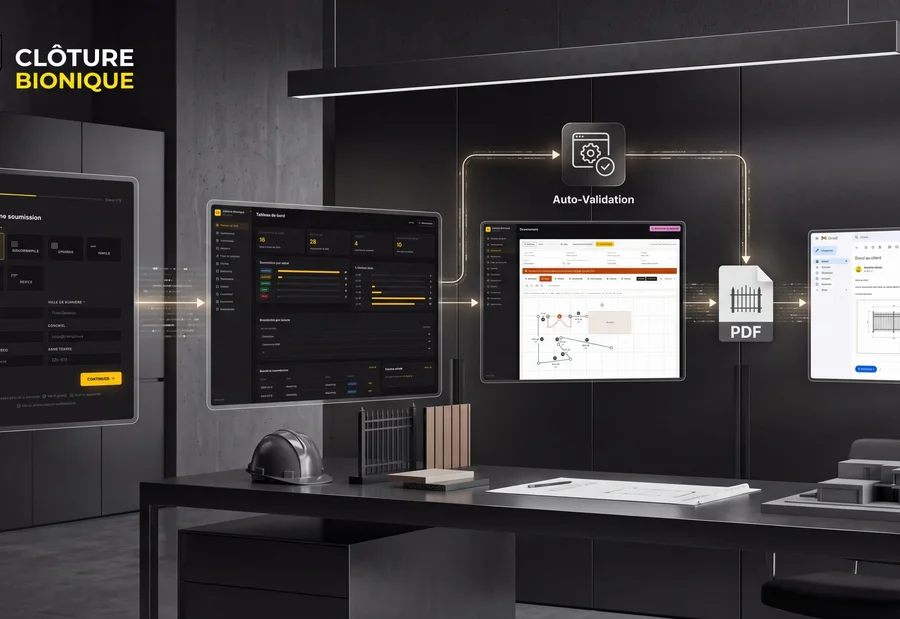
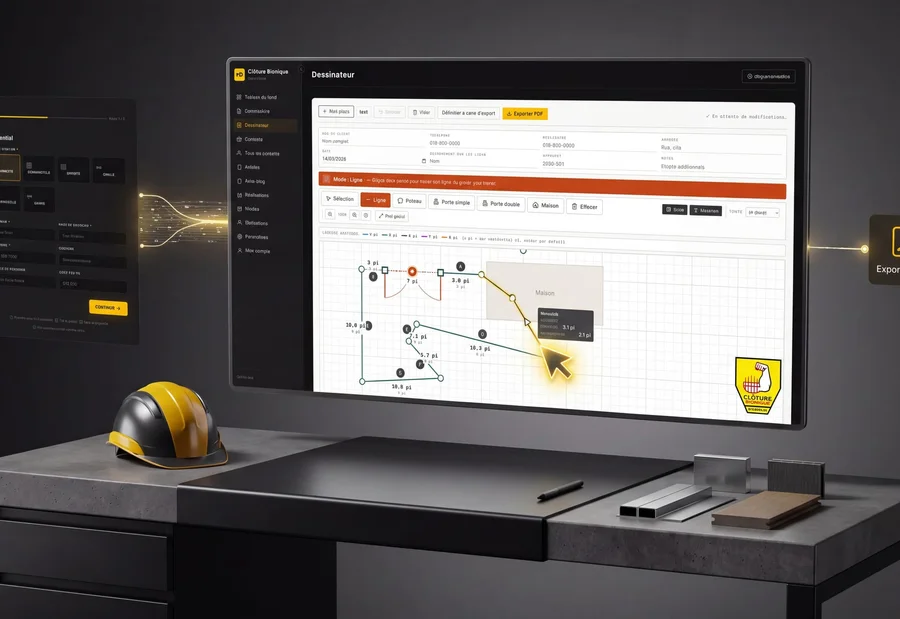
    Presentation of the application and submission process · Clôture Bionique
    Presentation of the application and submission process · Clôture Bionique

    Build a complete first journey.

    For internal software, the first version must allow an identified group to complete a task end-to-end. For a SaaS product, it is also necessary to specify who the service is for, how an account starts, and what the user can accomplish without assistance. Administration and support functions are part of this reflection.

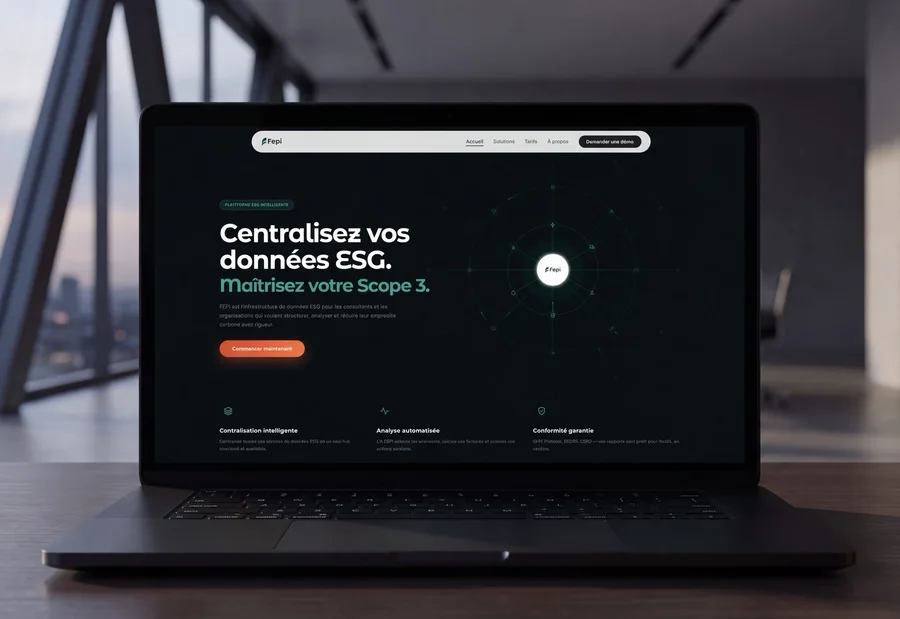
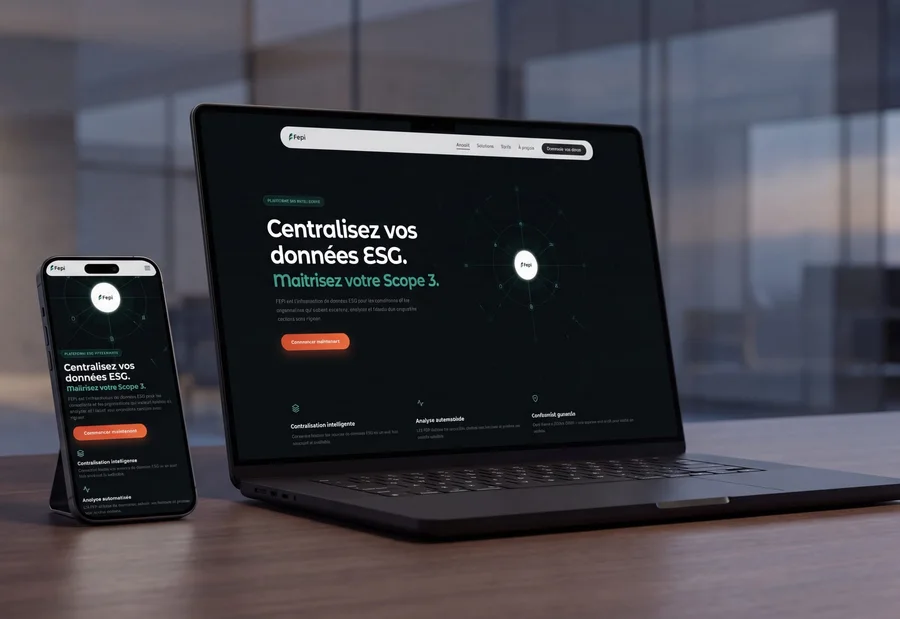
    The Fepi mandate gives another angle: a reporting platform must gather data from several sources before presenting them. A nice interface does not replace a clear definition of reference information, its updating, and error handling. These constraints are part of framing and testing.

    The process at a glanceFrom the need to a first completed task.
    1. Define the taskA precise use
    2. Try the pathA mockup to validate
    3. Build the first batchData, rules and access
    4. Learn from usesA pilot group

    Prepare the next steps from the first version.

    We define validation scenarios: authorized or denied access, missing data, import to resume, unavailable integration. A progressive rollout allows verifying operation with a pilot group and planning a rollback. Offline needs or native mobile app requirements are studied separately.

    The budget follows roles, business rules, connections, migration, and operational requirements. It distinguishes development, hosting, third-party services, and maintenance. The contract specifies delivered accesses, documentation, code ownership conditions, and licenses used, so the product can be maintained after delivery.

    How the project takes shape.

    1. Observe the business

      A real file becomes the support for framing: actors, information, rules, and expected result.

    2. Validate the journey

      The prototype and then a first usable version allow confronting choices with the team's work.

    3. Deploy in stages

      The pilot, data migration, and training precede the expansion to other users or modules.

    A concrete first scope

    Deliver a complete task before extending the software.

    A workshop must prepare a quote, a distributor match an order to its stock, a service team produce a document from a file. These tasks provide a concrete starting point for the business software.

    01

    The first delivery.

    A first useful path, then evolutions guided by usage.

    The first batch gathers essential roles, a complete path, necessary data, and the expected result: calculation, document, or file status. A mockup allows testing the logic before development. Errors and permissions are part of validation scenarios.

    Additional modules, API connections, offline operation, and a native mobile app are studied separately. We keep existing tools when they properly meet part of the need.

    02

    The budget over time.

    Distinguish project creation from its daily operation.

    The initial cost covers design, development, testing, and the chosen data migration. Operation covers servers, monitoring, third-party services, and updates. Documentation and accesses must allow software maintenance over time.

    A pilot group completes the task with its own cases. Calculation rules, missing data and unavailable connections are checked before extending use to the whole team.

    Your profession, your background

    How this applies in your sector

    All sectors ↗

    FAQ

    Frequently asked questions about this service

    A few useful answers before we start. And if you need more context, the full FAQ page is available too.

    The schedule is defined during scoping, based on deliverables, integrations, available content and approval steps. The proposal identifies phases and dependencies before confirming a launch date.

    Budget depends on content, design, features, integrations and data migration. The estimate separates delivery, optional work and recurring hosting, licensing and maintenance costs.

    Yes. We can build cross-platform mobile apps, web apps or mobile-friendly client portals. The right format depends on the business use case, expected usage and complexity of the product.

    Yes. We regularly take over websites, apps and digital tools already in place. We begin with an audit to understand what can be kept, improved or rebuilt, then propose a realistic roadmap.

    THE NEXT CHAPTER STARTS WITH YOU

    Let's talk about your starting point.

    Describe a task that your current tools force you to bypass. An example of a file or document to produce helps better frame the software than a long list of technologies.

    Let's talk about your company

    Your profession, your tools, what you would like to improve: give us the starting point.

    Would you prefer to speak to someone? +1 819 609-8335